About FREP
Fertilizer Research And Education Program
FREP was established in 1990 through legislative action to provide funding for research and education regarding the agronomically safe and environmentally sound use of fertilizer in California. The program is part of the California Department of Food and Agriculture (CDFA), Division of Inspection Services, within the Feed, Fertilizer, and Livestock Drugs Regulatory Services branch.
On this page
California Food and Agriculture code
14611. (b) In addition to the assessment provided in subdivision (a), the secretary may impose an assessment in an amount not to exceed one mill ($0.001) per dollar of sales for all sales of fertilizing materials, to provide funding for research and education regarding the use and handling of fertilizing material, including, but not limited to, support for University of California Cooperative Extension, the California resource conservation districts, other California institutions of postsecondary education, or other qualified entities to develop programs in the following areas:
- Technical education for users of fertilizer materials in the development and implementation of nutrient management projects that result in more agronomically sound uses of fertilizer materials and minimize the environmental impacts of fertilizer use, including, but not limited to, nitrates in groundwater and emissions of greenhouse gases resulting from fertilizer use.
- Research to improve nutrient management practices resulting in more agronomically sound uses of fertilizer materials and to minimize the environmental impacts of fertilizer use, including, but not limited to, nitrates in groundwater and emissions of greenhouse gases resulting from fertilizer use.
- Education to increase awareness of more agronomically sound use of fertilizer products to reduce the environmental impacts resulting from the overuse or inefficient use of fertilizing materials.
Nitrogen Tracking and Reporting Task Force
The Nitrogen Tracking and Reporting Task Force was charged with implementing Recommendation 11 of several recommendations made to the Legislature by the State Water Board: "CDFA, in coordination with the Water Boards, should convene a Task Force to identify intended outcomes and expected benefits of a nitrogen mass balance tracking system in nitrate high-risk areas. The Task Force should identify appropriate nitrogen tracking and reporting systems, and potential alternatives, that would provide meaningful and high-quality data to help better protect groundwater quality." Through meetings, presentations by subject matter experts, and discussion, the Task Force members came to general agreement on several components of an effective nitrogen tracking and reporting system. Below is supplemental information.
Task Force Supplemental Information
Presentations and Systems Considered
Appendix B of final report
Research, Education, and Results
More than 30 years of FREP research projects have focused on agronomic efficiency in the management of nutrients, precision irrigation and fertigation practices, soil, crop, and fertilizer interactions.
For more information about the research priorities, see Competitive Grant Program.
FREP Projects
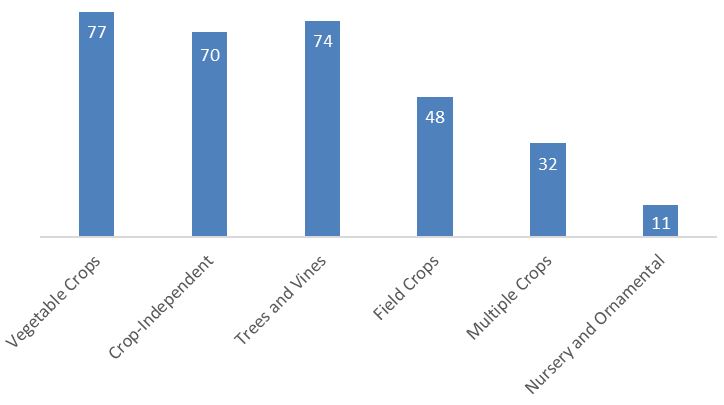
FREP has invested over $17 million for more than 220 research and education projects. The program has focused on the following areas:
Commodities
Outcomes: Bringing Research Into Practice
A number of FREP projects have resulted in practical applications and guides for growers and crop consultants, including, but not limited to, nitrogen fertilization models for crops, a nitrogen and water management production guide for coastal vegetables, and best management practices for fertilizer and water use in irrigated agriculture. See a more comprehensive list of outcomes at Nutrient Management Resources.
FREP Research Database
The searchable database of FREP research provides easy access and straightforward descriptions of relevant research results for consultants, growers and crop advisors.
Crop Fertilization Guidelines
Quickly access nutrient requirements for a distinct crop in a specific region of California and obtain the proper plant nutrient fertilizer rate suggestions that will not reduce yields and will potentially help reduce fertilizer overuse.
Irrigation and Nitrogen Management Training Program
This training program allows California farmers and ranchers to self-certify their Irrigation and Nitrogen Management Plan(s). There is also a Nitrogen Management Specialty available to Certified Crop Advisors looking to provide nitrogen management planning services to their clients, including certifying Irrigation and Nitrogen Management Plans (INMP) for California farmers and ranchers.
CropManage
FREP has provided funding to University of California scientists who have developed this online database-driven tool for select crops. The tool assists growers and farm managers in determining water and nitrogen fertilizer applications on a field-by-field basis. See the CropManage brochure.