
Broomrape
2026 Broomrape Compliance Agreement & Exhibits
The Broomrape Control Program has finalized the compliance agreement and associated exhibits for growers, processors, and transporters of processing tomatoes for 2026. This year the California Department of Food and Agriculture (CDFA) will sign compliance agreements with the processors but will not be signing with the growers or transporters this year. Processors will include the compliance agreements and exhibits in their contracts between the processor and growers as well as in their contracts between the processor and transporters.
For Processors, copies of the compliance agreement are available via email request from CDFA at: Broomrape_Program@cdfa.ca.gov. For Growers or Transporters, copies of the compliance agreement are available directly from your processor or via the above CDFA email address.
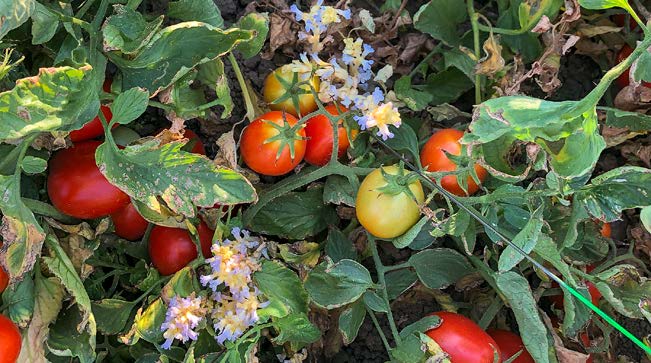
Broomrape is an invasive weed that presents a clear and present danger to California’s agricultural industry due to its harmful impact on crop yields and land values of commercial food crops including, but not limited to, lettuce, tomato, cauliflower, potato, hemp, eggplant, pomegranate, peppers, beans, peas, carrot, celery, mustard, spinach, sunflower, safflower, and fennel. Susceptible food crops, with an economic value at nearly six billion dollars ($6,000,000,000), may experience up to 70 percent annual crop losses in areas infested with broomrape. Broomrape also impacts commercial seed production and can make agricultural land unusable for planting susceptible crops for decades.
Broomrape represents a clear and present danger to California’s natural environment, with susceptible hosts comprising native California flora, including rare or endangered species, such as showy Indian clover (T. amoenum), Buck’s clover (T. buckwestiorum), and Monterey clover (Trifolium trichocalyx). The potential long-term damage to California’s native biodiversity and environment from this pest may be irreparable and action must be taken to ensure the maintenance, restoration, enhancement, or protection of the environment by developing and involving regulatory procedures for protection of the environment.
The state's agricultural economy and environment could be rapidly and seriously damaged if measures are not expanded to prevent the spread of broomrape, which can produce an estimated 10,000 to 100,000 seeds per infectious plant.
Broomrape Board & Meetings
Board
Meetings
Broomrape Board Meeting
Broomrape Board Financial Subcommittee Meeting
Broomrape Research Subcommittee
Broomrape Research Subcommittee
Broomrape Board Meeting
Broomrape Board Financial Subcommittee Meeting
Broomrape Research Subcommittee
Broomrape Board Meeting
Broomrape Board Meeting
Broomrape Board Financial Subcommittee Meeting
Broomrape Research Subcommittee Meeting
Broomrape Board Financial Subcommittee Meeting
Broomrape Board Meeting
Broomrape Research Subcommittee Meeting
Broomrape Board Meeting
Broomrape Board Financial Subcommittee Meeting
Broomrape Research Subcommittee Meeting
Broomrape Board Meeting
Broomrape Board Meeting
Broomrape Research Subcommittee Meeting
Broomrape Research Subcommittee Meeting
Broomrape Board Meeting
Broomrape Research Subcommittee Meeting
Broomrape Research Subcommittee Meeting
Broomrape Board Meeting
Broomrape Research Subcommittee Meeting
Broomrape Research Subcommittee Meeting
Broomrape Board Meeting
Broomrape Board Financial Subcommittee Meeting
This meeting is cancelled and will be rescheduled.
Broomrape Board Meeting
Broomrape Board Meeting
Interim Broomrape Board Meeting
Broomrape Board Meeting
Broomrape Board Meeting
This meeting is cancelled and will be rescheduled.